

100% Juice vs Boxed Juice vs Fresh Juice
Which Is the Healthiest Choice?
1/24/20265 min read
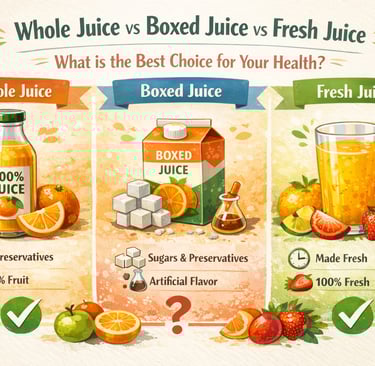
100% Juice vs Boxed Juice vs Fresh Juice: Which Is the Healthiest Choice?
Have you ever stood in the grocery store aisle, confused about which juice to bring home? With countless options on the shelves and the possibility of making fresh juice at home, choosing the best alternative can be overwhelming. In this comprehensive guide, we'll compare 100% juice, boxed juice, and fresh juice so you can make more conscious and healthy choices.
What Is Each Type of Juice?
Fresh Juice (Freshly Squeezed)
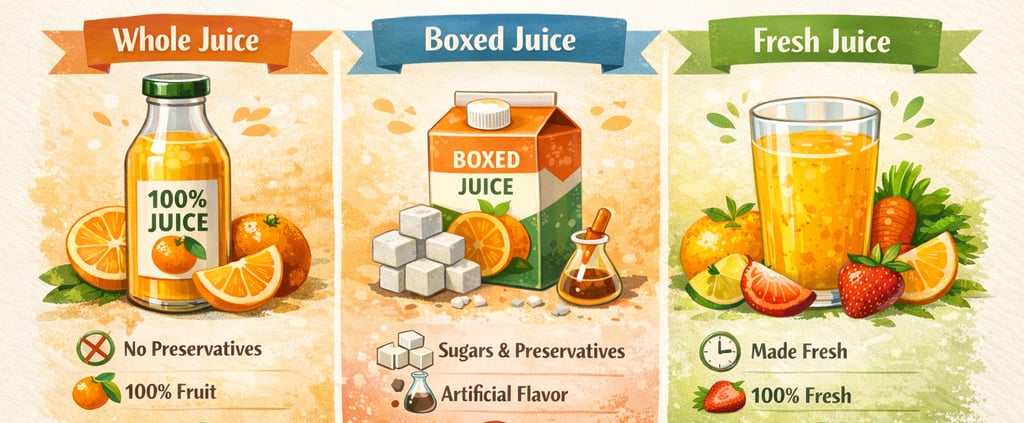
Fresh juice is prepared at home, extracted directly from fresh fruit, without added preservatives or industrial processing. It's consumed immediately after preparation, keeping most nutrients intact.
100% Juice (Pure Fruit Juice)
100% juice is an industrialized product made entirely from fruit, with no added water, sugar, or chemical preservatives. It undergoes pasteurization to ensure preservation but maintains a good portion of the original fruit's nutrients.
Boxed Juice (Juice Drink/Cocktail)
Juice drinks, commonly called "boxed juices," contain only 10% to 40% fruit juice, with the remainder composed of water, sugar, and additives. These are the most processed and least nutritious products in this comparison.
Nutritional Comparison: Which Has More Vitamins?
Vitamin and Mineral Content
Fresh Juice: The champion in nutrients when consumed immediately after preparation. Vitamin C, for example, begins degrading rapidly when exposed to air and light.
100% Juice: Retains between 70% to 90% of fresh fruit nutrients, depending on the pasteurization process. It's a nutritious alternative when fresh juice isn't feasible.
Boxed Juice: Has the lowest nutrient content, since the amount of actual fruit is reduced and processing is more intensive.
Sugar: The Hidden Villain
Here's a crucial difference that directly impacts your health:
Fresh Juice: Contains only the fruit's natural sugar (fructose), with no added sugars. A 7 oz glass of fresh orange juice has about 18g of natural sugar.
100% Juice: Also contains only natural fruit sugars, with no added sucrose. The content is similar to fresh juice.
Boxed Juice: Usually contains added sugar. A single glass can have between 20g to 30g of total sugar, easily exceeding the WHO's daily recommendation (25g of added sugar per day).
Fiber: The Big Difference
Fiber is essential for digestion, satiety, and glycemic control:
Whole Fruit: 2g to 4g of fiber per serving (always the best option!)
Fresh Juice: 0.5g to 1g of fiber (most remains in the pulp)
100% Juice: 0.5g to 2g of fiber (some retain pulp)
Boxed Juice: Almost zero fiber
Important: The absence of fiber causes the sugar in juice to be absorbed rapidly, creating blood sugar spikes.
How to Read Labels: Decoding the Packaging
Knowing how to interpret labels is fundamental for making good choices:
What to Look for on Labels
Ingredient List:
100% juice: should contain only "[fruit] juice" or "[fruit] pulp"
Juice drink: will have water, sugar, fruit pulp, and additives
Nutrition Facts:
Compare sugar content (the less, the better)
Check for fiber (the more, the better)
Observe sodium content (some juices have a lot of salt!)
Misleading Terms:
"Fruit flavored": may not contain real fruit
"100% vitamin C": may have added vitamins but little fruit
"Natural": vague term that doesn't guarantee absence of additives
Fruit Percentage
US regulations require labels to inform the percentage of juice:
100% juice: 100% fruit
Juice cocktail/drink: typically 10% to 40% juice
Fruit beverage: less than 10% fruit (avoid!)
Preservatives and Additives: What's in the Package?
100% Juice
Generally contains no chemical preservatives, as pasteurization and aseptic packaging ensure preservation. Some may have:
Ascorbic acid (vitamin C) as a natural antioxidant
Citric acid to adjust acidity
Boxed Juice (Juice Drink)
May contain various additives:
Preservatives (sodium benzoate, potassium sorbate)
Artificial colors
Artificial flavors
Stabilizers
Sugar or high fructose corn syrup
Health tip: The shorter the ingredient list, the better for your health.
Cost-Benefit Analysis: Is It Worth Paying More?
Let's analyze the investment vs. benefit of each option:
Fresh Juice
Cost: Medium to high (depends on fruit and seasonality) Benefits: Maximum nutritional value, no additives When it's worth it: For daily consumption in small amounts, especially at breakfast
100% Juice
Cost: High (2 to 4 times more expensive than juice drinks) Benefits: Good nutrient retention, convenience, no added sugar When it's worth it: For practical situations (travel, work, school), when fresh juice isn't possible
Boxed Juice (Juice Drink)
Cost: Low Benefits: Convenience and taste When it's worth it: Occasionally, as a soda substitute, but not as a nutrition source
Real analysis: A 32 oz bottle of 100% juice costs on average $4-7, while a juice drink costs $2-3. However, 100% juice offers 5x more nutrients and zero added sugar.
When to Choose Each Option?
Choose Fresh Juice When:
You're at home with time to prepare it
You want maximum nutritional value
You have fresh fruit available
You'll consume it immediately
Pro tip: Add vegetables like kale or spinach to increase nutrients and fiber.
Choose 100% Juice When:
You need practicality (work, travel)
You want to avoid added sugar
You're looking for a nutritious industrialized option
You don't have access to quality fresh fruit
Choose Boxed Juice (Rarely) When:
It's the only option available
You prefer it over soda (lesser evil)
You're in a social situation/event
Important: Even being "better than soda," juice drinks shouldn't be consumed daily.
Impact on Blood Sugar: Diabetics and Pre-Diabetics, Pay Attention!
All juices, even fresh ones, rapidly elevate blood sugar due to the absence or low content of fiber:
Glycemic Index: Juices have a high GI (around 50-70), similar to table sugar
Glycemic Load: A glass of juice can be equivalent to eating 3-4 fruits at once
Medical recommendation: People with diabetes or insulin resistance should:
Prefer whole fruit over juice
If consuming juice, limit to 3-5 oz
Pair with fiber (oatmeal, chia, flaxseed)
Never consume juice on an empty stomach
5 Practical Tips for Making Better Choices
1. Prioritize Whole Fruit Whenever possible, eat the fruit instead of drinking the juice. You'll get fiber, more satiety, and better glycemic control.
2. Dilute Your Juices Both fresh and 100% juice can be diluted with water (50/50) to reduce sugar concentration without losing much flavor.
3. Limit Portion Size A small glass (5-7 oz) is sufficient. Juices shouldn't replace water for daily hydration.
4. Add Fiber If making fresh juice, add 1 tablespoon of oat bran, chia, or flaxseed to improve the nutritional profile.
5. ALWAYS Read the Label Don't trust just the pretty packaging. Check ingredients, juice percentage, and sugar content.
Bonus Recipe: Supercharged Fresh Juice
Want to make the most of fresh juice? Try this recipe that balances flavor and nutrition:
Ingredients:
1 peeled orange
½ small carrot
1 slice of ginger
1 handful of mint leaves
1 tablespoon of chia seeds
3.5 oz coconut water
Instructions: Blend everything together and consume immediately. The chia fiber and vegetable nutrients make this juice much more complete!
Conclusion: Which Is Really the Best Choice?
The honest answer is: it depends on your context and goals.
For maximum nutrition: Fresh juice made on the spot wins, but whole fruit is still superior.
For convenience with quality: 100% juice is the best industrialized option.
For economy: Boxed juice is cheaper but offers little nutritional value.
Most importantly, understand that no juice replaces water as your primary source of hydration, and that juices should be consumed in moderation, even fresh ones.
Remember: the best choice is the one you can maintain in a balanced way in your routine, always prioritizing whole and minimally processed foods.
What about you—which type of juice do you usually consume? Share your experience in the comments and help other readers make more conscious choices!
Did you enjoy this content? Subscribe to our newsletter to receive more evidence-based healthy eating tips.