

Alternative Proteins: The Food Revolution Transforming the Future of Nutrition
Discover how cultivated meat, plant proteins, and biotechnology innovations are redefining what we put on our plates and saving the planet
1/7/20269 min read

Alternative Proteins: The Food Revolution Transforming the Future of Nutrition
Discover how cultivated meat, plant proteins, and biotechnology innovations are redefining what we put on our plates and saving the planet
The food world is undergoing an unprecedented transformation. As you read this article, laboratories around the globe are cultivating steaks without slaughtering a single animal, scientists are developing plant-based burgers with flavor identical to traditional meat, and startups are leading innovations that could forever change our relationship with food. Welcome to the era of alternative proteins.
What Are Alternative Proteins? Understanding Food's New Frontier
Alternative proteins are protein sources developed to replace or complement conventional animal products. Unlike traditional options obtained through raising and slaughtering animals, these innovations use cutting-edge technology to create sustainable, nutritious, and ethical foods.
The Three Main Categories:
Plant-based proteins: Products developed from plants like soy, peas, chickpeas, and other legumes that mimic meat's texture, flavor, and appearance.
Cultivated meat (or lab-grown meat): Real animal tissue produced by cultivating cells in bioreactors, without the need to raise and slaughter animals.
Fermentation proteins: Obtained through fermentation processes using fungi, yeasts, and microorganisms that produce proteins with nutritional profiles similar to animal products.
Why Is the World Betting on This? The Numbers Don't Lie
The global alternative protein market, valued at $15.7 billion in 2024, is expected to reach $25.2 billion by 2029, with annual growth of nearly 10%, according to MarketsandMarkets analysis. In the United States, the plant-based sector continues robust growth, with retail sales exceeding expectations.
But what's driving this explosive growth? Three main factors explain this revolution:
1. The Climate Emergency Demands Urgent Changes
Food production is responsible for approximately 26% of global greenhouse gas emissions, and livestock alone contributes 14.5% of that total, according to the Food and Agriculture Organization (FAO). This equals emissions from the entire global transportation sector.
Environmental impacts of traditional livestock include:
Massive deforestation for pasture creation and feed production
Unsustainable use of water resources
Methane emission from animal digestion (a gas 25 times more potent than CO2)
Soil degradation and biodiversity loss
Comparative studies show cultivated meat has potential to reduce greenhouse gas emissions by up to 96%, decrease land use by more than 90%, and reduce water consumption by up to 50%, according to life cycle analyses published in Oxford University research.
2. Food Security: Feeding 10 Billion People
The UN projects the world population will reach 9.7 billion people by 2050, requiring a 50% increase in food production. The challenge: how to feed all these people without collapsing the planet's ecosystems?
Alternative proteins offer a scalable solution. Cultivated meat, for example, can be produced anywhere in the world, reducing dependence on imports and increasing countries' food sovereignty. Additionally, the production cycle is much faster: while raising a cow takes about 24 months, cultivated meat is ready in 3 to 4 weeks.
3. More Conscious and Demanding Consumers
Research reveals that 67% of consumers in developed countries have reduced meat consumption. This movement isn't led only by vegetarians and vegans, but mainly by flexitarians—people who reduce meat consumption without eliminating it completely from their diet.
Reasons for this change include:
Health and wellness concerns
Growing environmental awareness
Animal welfare concerns
Search for food variety
Cultivated Meat: Science Fiction Becomes Reality in Supermarkets
In January 2025, a scene that seemed straight from a futuristic movie became reality: consumers in Los Angeles and New York could buy cultivated Angus meat in supermarkets, produced by Israeli company Chunk Foods. The product, result of an innovative cell cultivation process, reached shelves at prices similar to premium cuts of natural beef.
How Does the Magic of Cultivated Meat Work?
The cultivated meat production process is fascinating and involves four main stages:
1. Cell collection: Through minimally invasive biopsy, stem cells are extracted from animal muscle (cow, chicken, fish, etc.). The animal doesn't suffer and remains alive.
2. Cultivation in bioreactors: Cells are placed in special tanks called bioreactors, where they receive nutrients (like vegetable proteins from soy and wheat), vitamins, and minerals necessary to multiply.
3. Cell differentiation: Cells are stimulated to develop into muscle tissue and, in some cases, fat, replicating the natural process that happens inside the animal's body.
4. Structuring: Cultivated tissue is organized into three-dimensional structures using scaffolds (support matrices) made of biodegradable materials, creating meat's characteristic texture.
Innovation at the Forefront
The United States isn't just following this revolution—it's leading it. Several national projects are developing cultivated meat:
UPSIDE Foods (California): First company to receive FDA approval for cultivated chicken in the US, now available in select restaurants.
GOOD Meat (California): Second company approved by FDA, also producing cultivated chicken with plans to expand.
Future Fields (Canada): Developing growth media that doesn't require fetal bovine serum, reducing costs and making production more sustainable and ethical.
Major meat companies: Tyson Foods, Cargill, and JBS have invested millions in cultivated meat startups, signaling the industry's commitment to this technology.
Plant-Based Proteins: Already Available and Getting Better
While cultivated meat advances toward mass commercialization, plant proteins have already conquered significant space in the US and global market. The plant milk category moved $2.9 billion in 2023, representing 36% of alternative protein sales, according to GFI data.
Plant-Based Market Numbers
Growth of the plant-based sector in the US is impressive:
2020: $5 billion in retail sales
2022: $8 billion (60% growth)
Projection for 2025: Over $10 billion
Globally, the market reached $6.1 billion in 2022, with 6% annual growth. North America leads with 45% of the market, but Asia-Pacific should become dominant by 2030, driven by population growth.
Top Products on the Rise
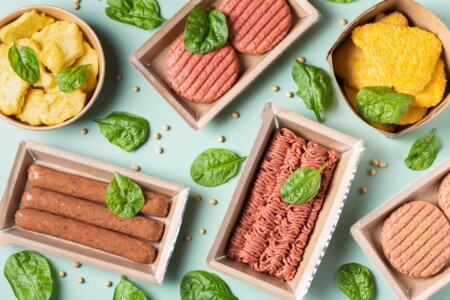
Plant meats: Burgers, nuggets, sausages, and even steaks made from soy, pea, and chickpea proteins. Brands like Beyond Meat and Impossible Foods already offer products indistinguishable from meat.
Plant milks: Beverages based on almonds, oats, soy, coconut, and rice, with US sales of $2.9 billion and $19.1 billion globally in 2022.
Alternative dairy products:
Plant-based creams: $700 million in 2023 (32% growth in two years)
Yogurts: $384 million
Ice creams: $351 million
Butters: $284 million
Cheeses: $219 million
Constant Technological Innovation
The plant-based industry invests heavily in research and development to improve three critical aspects:
Taste and texture: New extrusion and protein texturization technologies create products that faithfully imitate the meat consumption experience.
Nutritional profile: Combination of different plant protein sources (pea, rice, soy) to create more complete amino acid profiles.
Competitive price: Production scale and development of local ingredients to reduce costs and make products more accessible.
Challenges Still to Be Overcome
Despite impressive advances, alternative proteins face important obstacles:
1. Still-High Production Cost
The biggest challenge for cultivated meat is cost. Much of the inputs used still come from the pharmaceutical industry, making the process expensive. Cultivating the first cultivated meat burger cost $300,000 in 2013. Today, cost has dropped to less than $10 per unit, but still needs to decrease to compete with conventional meat.
Researchers work on developing culture media alternatives to fetal bovine serum, which can represent 55% to 95% of production costs.
2. Developing Regulation
Alternative protein regulation is still being built around the world. In the US, the FDA published guidelines in 2023 modernizing rules for safety evaluation and authorization of cultivated meat, but ongoing adjustments are necessary.
Pioneer countries:
Singapore (2020): First country to approve commercialization of cultivated chicken nuggets
United States (2023): FDA approved sale of cultivated chicken meat
Israel (2024): Ministry of Health authorized commercialization of cultivated beef
3. Consumer Acceptance
Although 52% of consumers consider the idea of plant meats good or very good, only 18% have tried these products. This indicates enormous growth potential but also the need for consumer education and continuous product quality improvement.
Another challenge is availability. 53% of consumers said they hadn't found plant alternatives in the six months prior to surveys, evidencing the need to expand distribution beyond major urban centers.
4. Perceptions About "Artificial Foods"
There's resistance from part of the population to laboratory-produced foods, even when safe and nutritious. The industry needs to invest in transparency and clear communication about production processes, nutritional benefits, and positive impacts.
The Role of Innovation in the Alternative Protein Revolution
The world is uniquely positioned to lead the alternative protein revolution for several reasons:
Agricultural Expertise
As one of the world's largest animal protein producers, there's deep knowledge about genetics, nutrition, and large-scale production that can be applied to alternative proteins.
Incomparable Biodiversity
Countries harbor unique plant species with potential for developing new protein sources. Researchers identify bioactive compounds in traditional foods and various edible plants.
Innovation Capacity
Major universities and research centers are developing alternative protein projects. Institutions like major state universities and research institutes are at the forefront of research.
Growing Consumer Market
With growing consumer markets and populations increasingly conscious about sustainability, there's a conducive environment for alternative protein development and adoption.
The Future Is Closer Than You Imagine
The transition to a food system based on alternative proteins won't be abrupt, but gradual and complementary. The expectation isn't to completely replace traditional livestock, but to offer diversified options that meet different needs, preferences, and contexts.
Trends for Coming Years
Product diversification: Beyond burgers and nuggets, we'll have access to premium cuts, exotic products (wagyu, wild salmon, ostrich), and hybrid foods combining animal and plant proteins.
Nutritional personalization: Cultivated proteins can be enriched with omega-3, specific vitamins, and other nutrients during the production process, creating custom functional foods.
Price reduction: With technological advancement and economies of scale, alternative protein prices are expected to become competitive with conventional products in the next 5 to 10 years.
Geographic expansion: Decentralized production will allow countries with limited resources for traditional livestock to develop their own alternative protein industries.
Mergers and consolidations: The market will go through a consolidation period, with major food companies acquiring innovative startups and integrating alternative proteins into their portfolios.
Are You Ready to Be Part of This Revolution?
The alternative protein revolution has already begun, and each of us has an important role in this transformation. It's not just about completely replacing traditional meat, but about expanding our food options with more sustainable, ethical, and nutritious alternatives.
Small changes can generate big impacts:
✓ Try plant-based products: Test veggie burgers, alternative milks, and other products available on the market. You might be positively surprised.
✓ Adopt flexitarianism: It's not necessary to eliminate meat completely. Start by reducing consumption once or twice a week and replace with alternative proteins.
✓ Learn about origin and production: Seek products with sustainability and ethical production certifications, whether animal or plant-based.
✓ Support innovation: Prefer products and companies investing in alternative protein research and development.
✓ Share knowledge: Talk with family and friends about alternative protein benefits and demystify prejudices.
✓ Push for adequate regulation: Support public policies that encourage alternative protein innovation and ensure product safety.
🚀 Quick Reference: Alternative Proteins at a Glance
📊 Market Size & Growth
Region 2024 Market Size 2029 Projection Growth Rate Global $15.7B $25.2B ~10% annually North America 45% of global Leading position Steady growth Asia-Pacific Fastest growing Will dominate by 2030 Population-driven Plant Milk $2.9B (2023) $4B+ (2027) 36% of alt protein sales
🥩 Three Types of Alternative Proteins
1. 🌱 Plant-Based
Source: Soy, peas, chickpeas, mushrooms
Availability: NOW - widely available
Price: Competitive to slightly premium
Examples: Beyond Meat, Impossible Foods
Tech: Extrusion, texturization
2. 🧬 Cultivated Meat
Source: Real animal cells grown in labs
Availability: Limited (FDA approved 2023)
Price: Premium (dropping rapidly)
Examples: UPSIDE Foods, GOOD Meat
Tech: Bioreactors, cell culture
3. 🧫 Fermentation Proteins
Source: Fungi, yeasts, microorganisms
Availability: Emerging
Price: Variable
Examples: Quorn, Perfect Day
Tech: Precision fermentation
🌍 Environmental Impact Comparison
Traditional Beef vs. Cultivated Meat:
Factor Cultivated Meat Reduction 🌡️ Greenhouse gases ↓ 96% 🌾 Land use ↓ 90%+ 💧 Water consumption ↓ 50% ⏱️ Production time 3-4 weeks (vs 24 months)
💰 Price Evolution Timeline
Cultivated Meat Cost Per Burger:
2013: $300,000 (first burger)
2020: $50
2024: <$10
2027 (projected): $5-7
2030 (projected): Price parity with premium beef
🛒 What's Available NOW (2025)
Plant-Based (Widely Available): ✅ Burgers, nuggets, sausages ✅ Plant milks (almond, oat, soy) ✅ Yogurts, ice creams, cheeses ✅ Creamers, butters ✅ Protein powders
Cultivated Meat (Limited): ⚠️ Select restaurants (LA, NYC, Singapore) ⚠️ Some retail locations ⚠️ Chicken products (approved) ⚠️ Beef products (expanding)
Coming Soon: 🔜 Cultivated seafood 🔜 Precision fermented dairy 🔜 Hybrid products 🔜 Premium cuts (wagyu, etc.)
📈 Consumer Trends
Why People Choose Alternative Proteins:
🌱 Environmental concerns (42%)
💪 Health benefits (38%)
🐮 Animal welfare (35%)
🍽️ Variety/curiosity (28%)
💵 Price (for plant-based) (15%)
Flexitarian Movement:
67% reduced meat consumption
Not eliminating, just reducing
1-2 meat-free days/week typical
Fastest-growing dietary group
🔬 How Cultivated Meat Works (4 Steps)
Step 1: Cell Collection (1 day)
Painless biopsy from live animal
Stem cells extracted
Animal unharmed
Step 2: Cell Cultivation (2-3 weeks)
Cells placed in bioreactors
Fed plant-based nutrients
Cells multiply exponentially
Step 3: Cell Differentiation (1 week)
Cells develop into muscle tissue
Fat cells added for marbling
Natural process replicated
Step 4: Structuring (1-2 days)
3D scaffolds shape tissue
Creates meat texture
Ready for packaging
Total time: 3-4 weeks (vs 24 months for traditional beef)
🏆 Major Players in the Space
Plant-Based Leaders:
Beyond Meat
Impossible Foods
Gardein
MorningStar Farms
Tofurky
Cultivated Meat Pioneers:
UPSIDE Foods (USA)
GOOD Meat (USA)
Mosa Meat (Netherlands)
Aleph Farms (Israel)
Meatable (Netherlands)
Traditional Companies Investing:
Tyson Foods
Cargill
JBS
Nestlé
Unilever
🍽️ Nutrition Comparison
Per 4oz (113g) serving:
Nutrient Beef Beyond Burger Cultivated Meat Protein 26g 20g 25g Fat 15g 18g 14g Saturated fat 6g 6g 5g Cholesterol 80mg 0mg 75mg Iron 2.5mg 4mg 2.5mg B12 2.4mcg 2.5mcg 2.4mcg
💡 Common Myths Debunked
❌ MYTH: "It's all chemicals and artificial" ✅ TRUTH: Plant-based uses recognizable ingredients; cultivated is real meat
❌ MYTH: "No nutritional value" ✅ TRUTH: Often fortified with extra nutrients; complete protein
❌ MYTH: "Tastes terrible" ✅ TRUTH: Modern products closely mimic meat; blind taste tests fool experts
❌ MYTH: "Too expensive forever" ✅ TRUTH: Prices dropping rapidly; will reach parity in 5-10 years
❌ MYTH: "Just a fad" ✅ TRUTH: $15.7B market growing 10% annually; major companies investing billions
🎯 How to Start Your Journey
Week 1: Explore
Try 3 different plant-based products
Note taste, texture preferences
No commitment yet
Week 2: Replace
Substitute 1-2 meals per week
Monday meatless, Thursday too
Track how you feel
Week 3: Experiment
Cook with plant proteins at home
Try recipes from apps/websites
Invite friends to try
Week 4: Establish
Set realistic long-term goals
Find favorite products
Join flexitarian movement
📱 Useful Resources
Apps & Websites:
HappyCow (find vegan restaurants)
PlantYou (recipes)
GoodFoodInstitute.org (research)
Forks Over Knives (guides)
Documentaries:
The Game Changers (athletes)
Cowspiracy (environment)
What the Health (health impacts)
🌟 Success Tips
Don't go all-or-nothing - Gradual reduction works best
Focus on addition, not deprivation - Add new foods
Season boldly - Plant proteins love strong flavors
Cook properly - Follow package instructions
Give it time - Palate adjusts in 2-3 weeks
Join communities - Online support groups help
🌱 Your Journey Starts Here
Together, we can build a more sustainable, healthy, and delicious future. The planet thanks you, animals thank you, and your body too! 🌍💚
The information in this article is based on recent scientific research and market data updated through December 2024. For specific decisions about your diet, always consult qualified professionals in nutrition and health.
Tags: alternative proteins, cultivated meat, plant-based diet, sustainable food, future of food, lab-grown meat, plant protein, food technology, environmental sustainability, flexitarian diet, meat alternatives, food innovation, cellular agriculture
This guide represents the current state of alternative protein technology and market trends as of early 2025. The field is rapidly evolving with new developments emerging regularly.