

Budget-Friendly Cooking
How to Eat Healthy on a Tight Budget in 2026
1/17/20264 min read
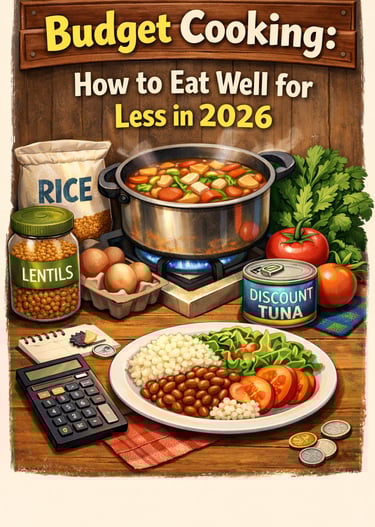
Budget-Friendly Cooking: How to Eat Healthy on a Tight Budget in 2026
Eating healthy doesn't have to break the bank. In this comprehensive guide, you'll discover how to prepare nutritious and delicious meals on a budget, with practical strategies that work in real life.
Why Healthy Eating Seems Expensive (And How to Change That)
Many people believe healthy eating is a luxury. The truth is, with planning and knowledge, you can eat better while spending less than you would on ultra-processed foods.
The secret lies in three pillars: smart planning, choosing the right foods, and total utilization techniques. Let's explore each one.
The 10 Best Budget-Friendly Nutritional Powerhouses
These foods offer maximum nutritional value for the lowest price:
Affordable Proteins:
Eggs: complete protein, versatile and economical
Beans: rich in protein, fiber, and iron
Lentils: cook quickly, no soaking needed, excellent protein source
Chickpeas: complete plant protein when combined with grains
Smart Carbohydrates:
Oats: fiber, protein, and incredibly versatile
Sweet potatoes: vitamins, minerals, and prolonged satiety
Brown rice (bought in bulk): more nutritious than white rice
Budget-Friendly Vegetables:
Carrots: vitamin A and long shelf life
Cabbage: high yield, rich in vitamin C
Pumpkin/Squash: buy whole, lasts for weeks
Beets: both leaves and roots are edible
Essential Additions:
Bananas: potassium and energy
Lemons: vitamin C and flavor enhancer
Weekly Meal Planning: The Method That Saves Up to 40%
Planning is the most powerful tool for reducing food costs. Here's how:
Step 1: Pantry Inventory
Before shopping, check what you already have at home. This prevents waste and duplicate purchases.
Step 2: Build Your Base Menu
Create a 7-day menu using ingredients that repeat in different preparations. For example:
Monday: Brown rice + beans + omelet + cabbage salad Tuesday: Pasta with lentil sauce + sautéed carrots Wednesday: Rice + shredded chicken (leftover) + roasted squash Thursday: Vegetable soup with chickpeas Friday: Baked omelet + roasted sweet potato + salad Saturday: Beet risotto + poached egg Sunday: Oat pancakes + seasonal fruit
Step 3: Optimized Shopping List
Organize by store sections and never shop hungry. Prioritize farmer's markets for produce and compare prices at wholesale stores for non-perishables.
Plant-Based Proteins: The Economical and Nutritious Alternative
Combining plant proteins creates complete amino acids for a fraction of the cost of meat:
Winning Combinations:
Rice + Beans = classic complete protein
Chickpeas + Tahini = protein-rich hummus
Lentils + Rice = perfect and quick combination
Peanut butter + Whole wheat bread = protein-packed snack
Golden Tip: Buy dried legumes in bulk packages. Cook large quantities and freeze in portions. One pound of dried beans yields about 2.5 pounds cooked.
Total Utilization: Zero Waste in the Kitchen
Throw away only what truly isn't usable. Total utilization can reduce your spending by up to 30%.
Stems and Leaves
Beet, carrot, and radish greens: sauté like spinach
Broccoli and kale stems: soups and broths
Squash peels: baked chips in the oven
Strategic Leftovers
Cooked chicken: shred for sandwiches, pies, risottos
Day-old rice: fritters, baked rice casserole
Stale bread: croutons, French toast, pudding, homemade breadcrumbs
Peels and Seeds
Well-washed potato peels: baked become nutritious snacks
Pumpkin seeds: toasted are rich in zinc
Cooking water: base for soups (nutrient-rich)
Batch Cooking: Cook Once, Eat All Week
The batch cooking method saves time, energy, and money. Set aside 2-3 hours on the weekend to:
Cook 3-4 portions of brown rice
Prepare 2 types of beans/legumes
Roast a sheet pan of varied vegetables
Make a base sofrito (onion, garlic, tomato) to use throughout the week
Prepare sauces and broths
Store in glass containers in the refrigerator (lasts 4-5 days) or freeze individual portions.
Home Garden: Free Herbs and Greens
Even in small apartments, you can grow:
For Beginners (small pots):
Chives
Parsley
Basil
Mint
Rosemary
Intermediate (larger pots or planters):
Lettuce
Arugula
Cherry tomatoes
Peppers
Economic Benefit: A bunch of fresh herbs costs around $3-4. A seedling costs $2 and produces for months. The return on investment is immediate.
Sample Monthly Shopping List (for 1 person - $250-350)
Pantry Staples (buy in bulk):
10 lbs brown rice
4 lbs beans (varieties)
2 lbs lentils
2 lbs chickpeas
2 lbs oats
4 lbs whole wheat flour
Cooking oil
Salt, dried spices
Weekly (farmer's market/grocery):
2 dozen eggs
6-7 lbs varied seasonal vegetables
4-5 lbs seasonal fruit
2 lbs chicken (when on sale)
Leafy greens
Budget-Friendly and Nutritious Recipes
Complete Legume Soup ($1.50 per serving)
Ingredients you already have: lentils, carrots, potatoes, onions, garlic, salt, pepper. Yield: 6 servings Nutrients: protein, fiber, vitamins A and C, iron
Baked Vegetable Frittata ($1.20 per serving)
Use leftover vegetables, eggs, and seasonings. Bake in a pan for 25 minutes. Complete protein, versatile and high-yield.
Homemade Chickpea Spread (Hummus) ($0.60 per serving)
Cooked chickpeas, garlic, lemon, olive oil. Blend until smooth. Complete plant protein, serves as spread, dip, or side dish.
Tips to Save Even More
At the Grocery Store:
Buy store brands (save 30-40%)
Products close to expiration date are discounted
Compare price per pound/ounce, not per package
Avoid pre-cut or pre-processed products
In the Kitchen:
Use a pressure cooker (saves energy)
Always cook with lids on
Thaw in the refrigerator, not in hot water
Reuse steaming water
Daily Habits:
Pack lunch (save up to $300/month)
Prepare homemade snacks
Make juice from peels (pineapple, passion fruit)
Freeze ripe fruit for smoothies
Myths About Budget-Friendly Eating
Myth 1: "Healthy food is expensive" Truth: Ultra-processed foods cost more per nutrient than whole foods.
Myth 2: "I don't have time to cook" Truth: Batch cooking in 2 hours solves the week. Pasta with vegetables takes 15 minutes.
Myth 3: "I need expensive supplements" Truth: A varied diet meets all needs (except specific diagnosed cases).
Conclusion: Affordable Health Is Within Your Reach
Eating well on a limited budget is not only possible but can be more nutritious than diets based on expensive processed foods. The secret lies in three simple practices: planning your meals, choosing high nutritional value foods, and fully utilizing every ingredient.
Start by implementing one strategy at a time. In the first week, create your meal plan. In the second, try batch cooking. In the third, plant your first herbs. Small changes generate big savings.
Remember: every dollar saved on smart eating is a direct investment in your health. Your body and your bank account will thank you.
Did you find these tips helpful? Share this article with someone who could benefit. And tell us in the comments: which strategy will you try first?
Want more budget-friendly and nutritious recipes? Subscribe to our newsletter and receive weekly practical tips to transform your eating habits without breaking the bank.