

Carbohydrates: Myths and Truths You Need to Know in 2026
Discover the truth about carbohydrates in your diet. Understand when they're villains or health allies, learn to choose the best types, and see how to include them in a healthy diet
1/13/20264 min read
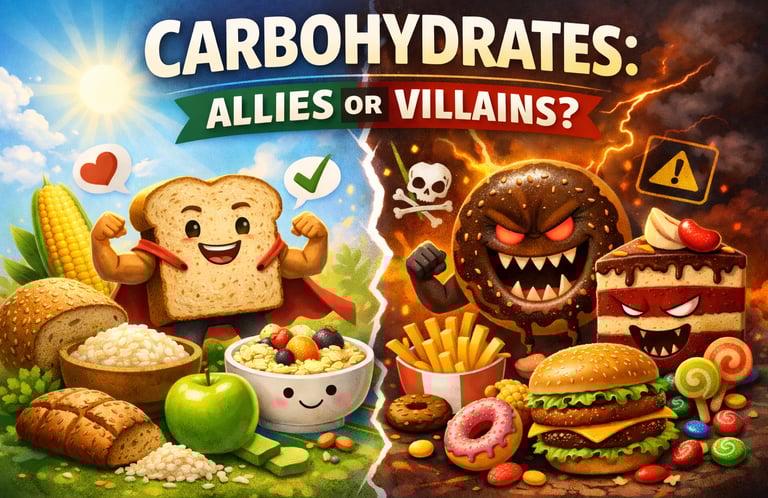
Carbohydrates: Myths and Truths You Need to Know in 2026
Discover the truth about carbohydrates in your diet. Understand when they're villains or health allies, learn to choose the best types, and see how to include them in a healthy diet.
Have you ever wondered if carbs really make you fat? Or if completely eliminating this nutrient from your diet is the best choice for weight loss? If the answer is yes, you're not alone. Carbohydrates are among the most misunderstood and controversial nutrients in modern nutrition.
In this article, we'll debunk the main myths about carbohydrates, reveal scientific truths, and show you how to make smart choices that transform this nutrient into a true health ally.
What Are Carbohydrates and Why Does Your Body Need Them?
Carbohydrates are essential macronutrients that provide energy for the body. They are the primary fuel source for the brain, muscles, and vital organs.
There are three main types:
Simple carbohydrates: Found in sugars, candies, sodas, and refined products. They're absorbed quickly and cause blood sugar spikes.
Complex carbohydrates: Present in whole grains, sweet potatoes, oats, and legumes. They're digested slowly, offering prolonged energy and blood sugar stability.
Fiber: A special type of carbohydrate that isn't digested but is fundamental for gut health, cholesterol control, and satiety.
Myth 1: "All Carbs Make You Fat"
Truth: Carbohydrates themselves aren't the villain behind weight gain. The problem lies in the type, quantity, and how you consume them.
Refined and ultra-processed carbohydrates, like white bread, regular pasta, and sugar, are quickly converted into glucose. When consumed in excess, the body stores this extra energy as fat.
On the other hand, complex carbohydrates rich in fiber promote satiety, regulate blood sugar, and provide essential nutrients. Studies show that diets rich in whole grains are associated with lower risk of obesity and chronic diseases.
The solution: Choose quality carbohydrates and consume portions appropriate to your energy needs.
Myth 2: "No-Carb Diets Are the Best Option for Weight Loss"
Truth: Restrictive diets that completely eliminate carbohydrates may work in the short term, but they're rarely sustainable long-term.
Radical carb exclusion can lead to fatigue, difficulty concentrating, mood changes, muscle loss, and nutritional deficiencies. Additionally, when people return to consuming carbohydrates, they frequently regain the lost weight—the famous yo-yo effect.
A balanced approach that includes quality carbohydrates in controlled portions tends to be more effective and healthier for sustainable weight loss.
The solution: Instead of eliminating, learn to choose and dose the right carbohydrates.
Myth 3: "Carbs at Night Automatically Turn to Fat"
Truth: The time you consume carbohydrates is less important than the quality and total quantity consumed throughout the day.
There's no magic that transforms carbohydrates into fat just because they were eaten after 6 PM. What determines weight gain or loss is the total energy balance—the relationship between calories consumed and calories burned.
In fact, for some people, especially athletes or those who train at night, consuming carbohydrates at dinner can help with muscle recovery and improve sleep quality.
The solution: Focus on carbohydrate quality and balance in your diet throughout the day.
Truth 1: Complex Carbohydrates Are Health Allies
Whole and minimally processed carbohydrates offer extraordinary benefits:
Provide sustained energy without glucose spikes
Are rich in B vitamins, minerals, and antioxidants
Improve gut health thanks to fiber
Help control cholesterol and blood pressure
Promote satiety, facilitating weight control
Examples of smart carbs: Oats, quinoa, brown rice, sweet potato, chickpeas, lentils, whole fruits with skin, 100% whole grain bread.
Truth 2: Timing Can Make a Difference for Those Who Train
While timing isn't crucial for most people, athletes and intense physical activity practitioners can benefit from strategic carbohydrate consumption:
Before training: Carbohydrates provide energy for physical performance. Consume 1 to 3 hours before, prioritizing easy-to-digest options.
After training: The post-workout window is ideal for replenishing muscle glycogen stores. Combine carbohydrates with proteins to optimize recovery.
How to Choose the Best Carbohydrates: Practical Guide
Prioritize:
Whole grains (brown rice, oats, quinoa)
Tubers (sweet potato, cassava, yams)
Legumes (beans, lentils, chickpeas)
Whole fruits with skin
Starchy vegetables (pumpkin, beets)
Avoid or Consume in Moderation:
Added sugars and sweets
Refined breads and pasta
Sodas and industrialized juices
Sugary breakfast cereals
Ultra-processed baked goods
Golden Tip:
Read labels! Look for products with ingredients you recognize and avoid those with long lists of chemical additives.
How Many Carbs Should You Consume?
The ideal amount varies according to age, physical activity level, goals, and health conditions. As a general reference:
Sedentary people: 45-55% of total calories
Moderately active: 50-60% of total calories
Athletes and very active: 55-65% of total calories
For a 2,000-calorie diet, this represents approximately 225-275g of carbohydrates per day for most people.
Important: Consult a nutritionist to calculate your individual needs.
Carbohydrates and Special Health Conditions
Diabetes
People with diabetes can and should consume carbohydrates, prioritizing complex ones rich in fiber, which have less impact on blood sugar. Portion control and professional monitoring are essential.
Insulin Resistance
Low glycemic index carbohydrates help improve insulin sensitivity. Always combine them with proteins and healthy fats.
Polycystic Ovary Syndrome (PCOS)
Women with PCOS benefit from complex carbohydrates distributed throughout the day, avoiding large portions at once.
Conclusion: Carbohydrates Are Friends, Not Enemies
Carbohydrates don't deserve the bad reputation they've gained. When you choose the right sources, consume appropriate amounts, and combine them with other nutrients, they become powerful allies for energy, health, and well-being.
The key is to abandon extremes. You don't need to completely eliminate carbohydrates, nor consume any type indiscriminately. Wisdom lies in balance and conscious choices.
Start today: Replace one refined carbohydrate with its whole version. Observe how your body responds. Small consistent changes generate great results.
Frequently Asked Questions (FAQ)
Can I eat carbs and lose weight? Yes! The important thing is to choose quality carbohydrates, control portions, and maintain a healthy caloric deficit.
What's the best carbohydrate for breakfast? Oats, 100% whole grain bread, tapioca with healthy fillings, and fruits are excellent options.
Do carbohydrates cause inflammation in the body? Refined carbohydrates and sugars can promote inflammation. Whole grains have an anti-inflammatory effect due to fiber and antioxidants.
How many grams of carbohydrate should a healthy meal have? It depends on your needs, but generally 30-60g per main meal is adequate for most people.
Can I eat pasta and stay healthy? Yes! Opt for whole grain pasta, control portions, and combine with vegetables and lean proteins.
Did you like this article? Share it with someone who needs to better understand carbohydrates. And don't forget to subscribe to our newsletter to receive more content about healthy, evidence-based nutrition.
This article was developed based on updated scientific evidence and is for informational purposes. Always consult a nutritionist or doctor before making significant changes to your diet.