How to Start Eating Healthy: A Simple & Sustainable Beginner’s Guide
1/5/2026
How to Start Eating Healthy: A Simple, Sustainable Guide to Eating Better Without Suffering
Want to start eating healthy but feel overwhelmed by diets, restrictions, and rules?
This practical guide shows you how to build healthy eating habits step by step—without starving, counting calories, or giving up the foods you love.
Learn how to eat better in a realistic, sustainable, and enjoyable way, with smart food swaps, easy recipes, meal prep strategies, and proven habits that actually last.
Tried Starting a Diet on Monday… and Quit by Thursday?
If that sounds familiar, you’re not alone—and it’s not your fault.
The truth is that most restrictive diets fail. Not because people lack discipline, but because extreme diets are unsustainable, unrealistic, and disconnected from real life.
Healthy eating should support your life, not control it.
Eating better does not have to mean:
Starving yourself
Obsessively counting calories
Cutting entire food groups
Living on salad and plain chicken
Giving up social events
When done right, healthy eating becomes natural, flexible, and even enjoyable.
What You’ll Learn in This Healthy Eating Guide
By the end of this article, you’ll understand:
Why restrictive diets don’t work—and what works instead
How to start eating healthy today, without radical changes
Smart food swaps that improve nutrition without losing flavor
How to organize your kitchen for success
Meal prep strategies to save time and money
How to maintain healthy habits long term
👉 Small changes. Real food. Sustainable results.
Why Diets Fail (And What Actually Works)
The Biggest Healthy Eating Myth
Many people believe:
“Healthy eating means restriction, sacrifice, and suffering.”
This belief is one of the main reasons people quit.
Healthy eating is NOT about:
Cutting out everything you enjoy
Feeling hungry all the time
Feeling guilty for eating “off plan”
Restarting every Monday
What Healthy Eating Really Is
Healthy eating IS:
Choosing natural, minimally processed foods more often
Balancing nutrition with pleasure
Eating when you’re hungry and stopping when satisfied
Enjoying treats occasionally—without guilt
Having energy, focus, and well-being
The Golden Rule of Healthy Eating
If there’s one rule that simplifies everything, it’s this:
The more natural the food, the better.
The more processed, the more moderation is needed.
In practice:
More real foods from nature
Less ultra-processed foods from factories
More ingredients you recognize
Less sugar, additives, and preservatives
A Simple Question That Improves Every Food Choice
Before eating, ask yourself:
👉 Did this food come from nature or from a factory?
Choose more often:
Fruits and vegetables
Whole grains
Eggs, fish, meat
Legumes, nuts, seeds
Limit occasionally:
Ultra-processed snacks
Sugary drinks
Industrial frozen meals
This mindset alone can dramatically improve your diet.
The 7 Pillars of Sustainable Healthy Eating
1. Base Your Diet on Real Foods
Real foods are simple and recognizable—foods your grandparents would call “food”:
Rice, beans, potatoes
Fruits and vegetables
Eggs, meat, fish
Nuts and seeds
Quick tip: If a product has a long ingredient list you can’t pronounce, it’s probably ultra-processed.
2. Eat a Colorful, Varied Diet
Color equals nutrients.
Each color provides different health benefits:
Red: antioxidants (tomatoes, berries)
Orange: vitamin A (carrots, pumpkin)
Green: fiber and minerals (leafy greens)
Purple: anti-inflammatory compounds
White: immune-supporting compounds
🎯 Goal: 5–7 different colors per day.
3. Balance Macronutrients
Your body needs all three:
Carbohydrates: energy for brain and muscles
Choose whole grains, fruits, and legumes.
Protein: muscle repair and satiety
Include protein at every meal.
Healthy fats: hormones and brain health
Use olive oil, avocado, nuts, and fatty fish.
4. Stay Properly Hydrated
Water is essential for digestion, energy, and metabolism.
Aim for ~35 ml per kg of body weight
Increase intake with heat or exercise
Often, fatigue is just dehydration.
5. Eat Regularly
Regular meals help:
Prevent extreme hunger
Improve digestion
Reduce cravings
Support metabolic balance
Skipping meals often leads to overeating later.
6. Practice Moderation, Not Elimination
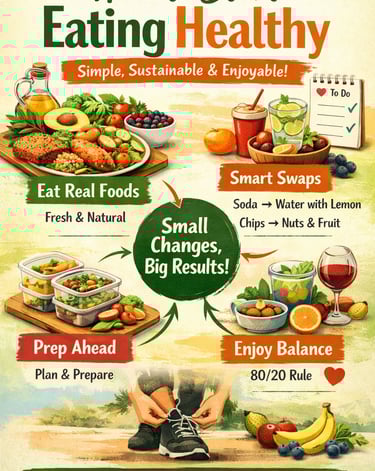
The 80/20 rule works because it’s realistic:
80% nourishing foods
20% flexibility and enjoyment
This approach prevents burnout and binge cycles.
7. Enjoy Your Food
Food is more than fuel—it’s culture, pleasure, and connection.
Healthy eating should feel like self-care, not punishment.
How to Start Eating Healthy (Step by Step)
Weeks 1–2: Awareness
Observe what you eat (no calorie counting)
Notice hunger, emotions, and energy levels
Identify ultra-processed foods
👉 No changes yet. Awareness comes first.
Weeks 3–4: First Simple Changes
Choose only three:
Drink more water
Add fruit to breakfast
Include vegetables at lunch
Replace soda with water
Swap one processed food for a natural one
Consistency matters more than perfection.
Weeks 5–6: Expand Gradually
Add a few more habits:
Include protein at every meal
Reduce added sugar
Cook more at home
Prepare healthy snacks
Week 7 Onward: Make It a Lifestyle
By now, eating well feels normal—not forced.
That’s real success.
Smart Food Swaps That Actually Work
White bread → Whole grain bread
Sugary drinks → Water with lemon
Processed snacks → Fruit + nuts
Milk chocolate → Dark chocolate (70%+)
Ready-made sauces → Homemade seasonings
These swaps improve nutrition without sacrificing flavor.
Meal Prep: Eat Healthy Even When Life Is Busy
Meal prep helps you:
Save time
Avoid impulsive takeout
Eat balanced meals
Reduce stress and food waste
You don’t need perfection—just simple preparation.
How to Maintain Healthy Habits Long Term
Focus on habits, not motivation
Expect obstacles and plan ahead
Be flexible
Celebrate small wins
Progress beats perfection—always.
Final Thoughts: Start Small, Stay Consistent
You don’t need extreme diets or radical rules.
You need:
One healthier choice at a time
One habit built gradually
One realistic plan you can maintain
Healthy eating is not a finish line.
It’s a lifelong journey.
👉 Start today. Start small. Stay consistent.
Learn how to start eating healthy without strict diets or suffering. A practical, step-by-step guide with smart food swaps, meal prep tips, and sustainable habits.