

Nutrition and Mental Health
What to Eat to Improve Mood, Focus, and Concentration
1/7/20262 min read
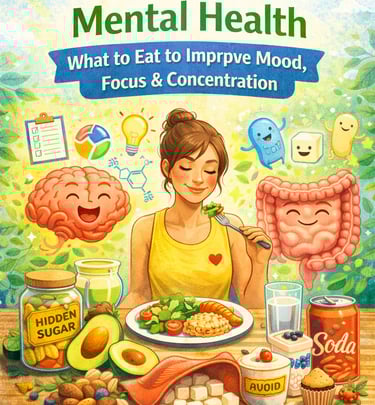
Nutrition and Mental Health: What to Eat to Improve Mood, Focus, and Concentration
Have you ever noticed how what you eat can directly influence your mood, energy levels, and even mental clarity? 🧠🍽️
Science confirms it: nutrition and mental health are deeply connected. What we put on our plate affects neurotransmitters, hormones, and overall brain function.
In this article, you’ll discover how food choices can help improve mood, reduce anxiety, and boost focus — plus which foods to prioritize daily to care for your mind naturally.
The Connection Between Nutrition and Mental Health
The brain is an extremely active organ and requires high-quality nutrients to function properly. Vitamins, minerals, healthy fats, and amino acids are essential for producing neurotransmitters like serotonin, dopamine, and GABA, which regulate well-being, motivation, and relaxation.
In addition, about 90% of serotonin is produced in the gut, reinforcing the strong link between diet, gut microbiota, and emotional health.
👉 Frequently eating poorly may contribute to:
Mood swings
Lack of concentration
Irritability
Mental fatigue
Anxiety and stress
Foods That Help Improve Mood
Certain foods contain nutrients that stimulate serotonin production and promote emotional balance.
Tryptophan-Rich Foods
Tryptophan is an essential amino acid required for serotonin synthesis.
Include in your meals:
Bananas
Oats
Eggs
Chickpeas
Nuts and seeds
💡 Consuming tryptophan alongside healthy carbohydrates helps improve its absorption by the brain.
Nutrition for Better Focus and Concentration
To maintain focus and mental clarity, the brain needs a steady supply of energy and nutrients that protect neurons.
Healthy Fats for Brain Health
Omega-3-rich fish (sardines, tuna, salmon)
Flaxseed and chia seeds
Walnuts and other nuts
Omega-3 improves communication between brain cells and is associated with better memory and concentration.
B-Complex Vitamins
Essential for proper nervous system function:
Beans and lentils
Dark leafy greens
Eggs
Avocado
The Role of the Gut in Emotional Health
The gut is often called the “second brain” because it houses billions of bacteria that directly influence mood and behavior.
Foods That Support Gut Microbiota:
Fiber: fruits, vegetables, legumes, and whole grains
Natural probiotics: plain yogurt, kefir, kombucha, sauerkraut
Prebiotics: garlic, onion, green bananas, oats
A healthy gut contributes to:
✔ Reduced inflammation
✔ Better nutrient absorption
✔ Greater emotional balance
Foods That Can Harm Mental Health
Just as some foods help, others can interfere — especially when consumed in excess.
Try to avoid or limit:
Refined sugar
Sugary drinks and sodas
Ultra-processed foods
Excess caffeine
Trans fats
These foods can cause energy spikes followed by crashes, negatively affecting mood and increasing anxiety.
How to Build an Eating Routine That Supports Mental Health
Caring for your mental health through nutrition doesn’t require perfection — it requires consistency.
Practical tips:
Eat regular meals
Prioritize whole, real foods
Stay well hydrated
Avoid long fasting periods without guidance
Eat mindfully, away from distractions
🍽️ Eating well is also an act of emotional self-care.
Conclusion
Nutrition is a powerful ally for mental health. By choosing natural, varied, and nutrient-rich foods, you’re not just taking care of your body — you’re supporting your mind, emotions, and overall quality of life.
At Saúde na Mesa, we believe that small daily choices can lead to big transformations. Start with your plate and feel the difference.
Have you noticed how your diet affects your mood or concentration?
Share your experience in the comments and help more people care for their mental health through food 🥗💚