

Plant-Based Proteins Beyond Soy
Discover 7 Nutritious and Delicious Alternatives
1/20/20265 min read
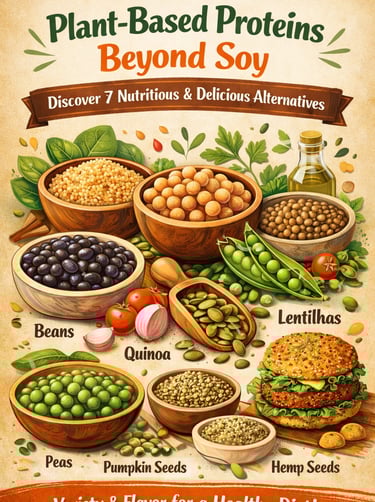
Plant-Based Proteins Beyond Soy: Discover 7 Nutritious and Delicious Alternatives
Discover plant-based proteins beyond soy! Complete guide with chickpeas, lentils, and seeds, practical recipes, and nutritional tips for healthy eating.
Did you know you can get high-quality protein without relying exclusively on soy or meat? Whether you're vegetarian, vegan, or simply looking to diversify your diet, knowing different plant-based protein sources can completely transform your meals and your health.
In this comprehensive guide, you'll discover the best plant protein alternatives, their nutritional benefits, and creative recipes to include them in your daily routine. Get ready to expand your culinary repertoire!
Why Diversify Your Plant Protein Sources?
Relying on a single protein source limits the variety of nutrients you consume. Each legume and seed has a unique nutritional profile, with different vitamins, minerals, and amino acids.
By diversifying, you:
Obtain a complete spectrum of essential amino acids
Increase your intake of fiber, iron, and zinc
Reduce the risk of food allergies and intolerances
Make your meals more interesting and flavorful
The 7 Best Plant-Based Proteins Beyond Soy
1. Chickpeas: The Mediterranean Superfood
Nutritional profile (per 100g cooked):
Protein: 8.9g
Fiber: 7.6g
Iron: 2.9mg
Calcium: 49mg
Chickpeas are rich in quality protein and have a low glycemic index, making them excellent for weight management and cardiovascular health. An important source of folate, they're especially beneficial for pregnant women.
How to use: hummus, falafel, salads, curries, flour for baking
2. Lentils: Small Nutritional Giants
Nutritional profile (per 100g cooked):
Protein: 9g
Fiber: 7.9g
Iron: 3.3mg
Folate: 181mcg
Lentils cook quickly (15-20 minutes) and don't require pre-soaking, making them ideal for busy weekdays. They're rich in antioxidant polyphenols that fight inflammation.
Varieties: red, green, black (beluga), brown
How to use: soups, veggie burgers, plant-based bolognese sauce, salads
3. Peas: Complete and Versatile Protein
Nutritional profile (per 100g):
Protein: 5g (fresh) to 25g (isolated protein)
Fiber: 5.1g
Vitamin K: 24.8mcg
Pea protein has gained prominence for its superior digestibility and nearly complete amino acid profile. It's hypoallergenic and sustainable.
How to use: protein smoothies, creamy soups, purées, ground meat substitute
4. Various Beans: Protein-Rich Tradition
Average nutritional profile (per 100g cooked):
Protein: 7-9g
Fiber: 6-8g
Iron: 2-4mg
Black beans, white beans, kidney beans, black-eyed peas, azuki beans - each variety offers unique benefits. Black beans are especially rich in antioxidant anthocyanins.
How to use: salads, patés, brownies (black beans), sautés
5. Quinoa: The Complete Protein Pseudocereal
Nutritional profile (per 100g cooked):
Protein: 4.4g (with all 9 essential amino acids)
Fiber: 2.8g
Magnesium: 64mg
Quinoa is one of the rare complete plant protein sources, eliminating the need for food combinations to obtain all essential amino acids.
How to use: bowl base, salads, porridge, plant-based tabbouleh
6. Hemp Seeds: Nutritional Powerhouse
Nutritional profile (per 30g):
Protein: 10g
Omega-3: 2.5g
Iron: 2.4mg
Hemp seeds offer very high-quality protein with an excellent omega-3 to omega-6 ratio. They have a mild, slightly nutty flavor.
How to use: smoothies, yogurt, salads, homemade granola
7. Pumpkin Seeds: Rich in Zinc and Protein
Nutritional profile (per 30g):
Protein: 8.5g
Zinc: 2.5mg
Magnesium: 156mg
Excellent source of zinc, essential for immunity and hormonal health. They also provide tryptophan, a precursor to serotonin.
How to use: toasted, breading flour, seed butters, snacks
How to Combine Plant Proteins to Get All Amino Acids
While quinoa and soy are complete proteins, most plant sources have limiting amino acids. The good news? You don't need to combine them in the same meal - your body stores amino acids throughout the day.
Classic complementary combinations:
Legumes + Grains: brown rice with beans, whole wheat bread with hummus
Legumes + Seeds: chickpea salad with tahini, lentils with sunflower seeds
Grains + Nuts: oatmeal with peanut butter, rice with cashews
5 Creative Recipes with Plant Proteins
1. Shredded Chickpea "Meat" (Vegan)
Ingredients:
2 cups cooked chickpeas
2 tablespoons olive oil
1 chopped onion
2 garlic cloves
1 teaspoon smoked paprika
1 teaspoon cumin
Salt and pepper to taste
Instructions: Mash chickpeas with a fork until you get a shredded texture. Sauté onion and garlic in olive oil, add mashed chickpeas and spices. Cook for 10 minutes, stirring occasionally. Use in tacos, wraps, or sandwiches.
Yield: 4 servings | Protein per serving: 8g
2. Lentil-Beet Burger
Ingredients:
1 cup cooked lentils
1 small beet, grated
½ cup rolled oats
1 tablespoon ground flaxseed
Seasonings: garlic, onion, parsley
Instructions: Process all ingredients until you form a mixture that can be shaped. Form burgers and bake at 350°F for 25 minutes (flipping halfway). The beet adds moisture and vibrant color!
Yield: 4 burgers | Protein per unit: 7g
3. Protein Seed Butter (Tahini-Style)
Ingredients:
1 cup toasted sunflower or pumpkin seeds
2-3 tablespoons olive oil
Pinch of salt
Instructions: Process seeds until they become flour, then continue processing while adding oil gradually until you achieve a creamy consistency. Perfect for spreading on bread or using as a sauce base.
Protein per 2 tablespoons: 6g
4. Protein Quinoa Bowl with Peas
Ingredients:
1 cup cooked quinoa
½ cup fresh or frozen peas
Various vegetables (cherry tomatoes, cucumber, carrots)
2 tablespoons hemp seeds
Tahini-lemon dressing
Instructions: Assemble the bowl with quinoa as a base, add cooked peas, fresh vegetables, and finish with hemp seeds and dressing. Complete and balanced meal!
Total protein: 18-20g
5. Black Bean Protein Brownies
Ingredients:
1 ½ cups cooked black beans
2 eggs (or vegan substitute)
⅓ cup cocoa powder
½ cup coconut sugar
¼ cup coconut oil
1 teaspoon vanilla extract
Instructions: Blend everything in a blender until smooth. Pour into a greased pan and bake at 350°F for 25-30 minutes. No one will guess it has beans!
Protein per serving: 5g
Practical Tips to Increase Plant Protein Daily
For breakfast:
Add 2 tablespoons of hemp seeds to your smoothie or yogurt (+7g protein)
Make pancakes with chickpea flour
Prepare overnight oats with chia seeds
For lunch and dinner:
Replace half the rice with quinoa
Add lentils to pasta sauce
Top salads with toasted seeds
For snacks:
Hummus with veggie sticks
Trail mix with nuts and seeds
Chickpea spread on whole wheat bread
Comparison Table: Plant Proteins vs. Animal Proteins
Food Protein (per 100g) Fiber Iron Sat. Fat Chickpeas 8.9g 7.6g 2.9mg 0.3g Lentils 9g 7.9g 3.3mg 0.2g Chicken breast 31g 0g 1mg 1g Red meat 26g 0g 2.6mg 7.3g
Advantages of plant proteins: zero cholesterol, rich in fiber and antioxidants, lower environmental impact, more economical.
Frequently Asked Questions About Plant Proteins
Can I build muscle mass with plant proteins? Yes! Studies show that vegan athletes can build muscle mass equivalent to omnivores, as long as they consume adequate amounts of protein (1.6-2.2g per kg of body weight) and vary their sources.
Do I need to consume plant and animal proteins together? It's not necessary. A plant-based diet, when well-planned and diversified, provides all essential amino acids.
How much plant protein should I consume daily? The general recommendation is 0.8-1g of protein per kg of body weight for sedentary people, and 1.2-2.2g for those engaged in intense physical activity.
Do canned chickpeas lose nutrients? The canning process preserves most nutrients, but prefer low-sodium versions and rinse before using to reduce salt content.
Conclusion: Diversity is Key to Healthy Eating
Incorporating different plant-based proteins into your daily routine doesn't have to be complicated. Start by replacing one meat meal per week with a plant option, try new recipes, and discover surprising flavors.
Remember: each legume, each seed, each grain offers a universe of nutrients, textures, and culinary possibilities. Variety isn't just healthy - it's delicious!
Next step: choose one of the recipes above and try it this week. Your body (and the planet) will thank you!
Did you enjoy this content? Share it with anyone seeking healthier and more diverse eating. And don't forget to explore our other articles about nutrition and practical recipes here at Health on the Table!
Tags: plant-based proteins, chickpeas, lentils, seeds, healthy eating, vegetarian recipes, plant nutrition, plant-based diet, vegan protein, complete proteins