

Spices and Aromatic Herbs
How to Enhance Flavor and Health in Your Meals
1/13/20265 min read
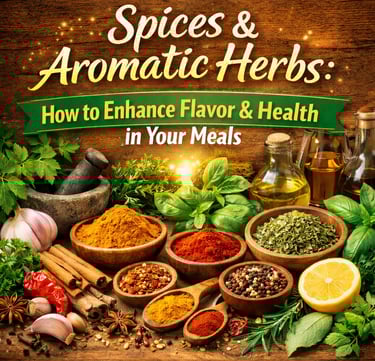
Spices and Aromatic Herbs: How to Enhance Flavor and Health in Your Meals
Did you know that those colorful spices in your pantry are much more than simple seasonings? They carry millennia of history, were responsible for maritime discoveries, and best of all, can completely transform your health and the flavor of your meals.
In this complete guide, you'll discover how to use spices and aromatic herbs to create delicious dishes while taking care of your well-being. Get ready for a sensory journey through the aromas and flavors that changed the world!
What Are Spices and Why Are They So Special?
Spices are condiment plants used to enhance the flavor, aroma, and color of foods. They come from different parts of plants: seeds (cumin, cardamom), bark (cinnamon), roots (ginger, turmeric), flowers (saffron, cloves), or fruits (pepper).
What makes spices so valuable is their exceptional concentration of bioactive compounds. Unlike what many think, the amounts of antioxidants available in spices are much higher than those found in fruits and vegetables, which means you get more benefits by consuming smaller quantities.
A Journey Through Time: The Fascinating History of Spices
The history of spices intertwines with the history of humanity itself. Since Greco-Roman antiquity, spice routes interconnected diverse peoples over time, from Europe to Asia.
During the Middle Ages, spices like pepper, cinnamon, cloves, and nutmeg were luxury items as valuable as gold. Rare and expensive, spices were highly prized in medieval Europe, came from far away, and generated generous profits.
It was precisely the search for these treasures that drove the Age of Discovery. In 1453, the fall of Constantinople, conquered by the Ottoman Empire, led to the loss of the main overland spice route to Europe, prompting Portugal to seek an alternative maritime route that culminated in Vasco da Gama's discovery of the route to India in 1497.
Medicinal Properties Proven by Science
Today, modern science confirms what our ancestors already knew: spices are true natural medicines. Each one has unique properties that benefit our health in different ways.
Antioxidant and Anti-inflammatory Powers
Spices are rich in compounds like flavonoids, which have antioxidant, anti-inflammatory, antiviral effects, and other actions that benefit body function. These compounds fight free radicals responsible for premature aging and various chronic diseases.
Immune System Strengthening
Spices possess beneficial health properties, such as improving and preventing respiratory and urinary infections, rheumatic inflammations, and strengthening the immune system, making them essential allies especially during flu and cold seasons.
Complete Guide to the Main Spices
Let's explore the most powerful spices and how each one can benefit your health:
Turmeric (Curcuma)
The golden star of spices! Turmeric presents potent therapeutic properties thanks to curcumin, a compound with antioxidant and anti-inflammatory effects.
Proven benefits:
Strengthens the immune system with antiviral action
Aids in eliminating toxins and fat
Helps with post-workout muscle recovery
Protects against stress, anxiety, and cognitive decline
Reduces LDL cholesterol and triglycerides
How to use: Add half a teaspoon to sauces, soups, risottos, golden milk, or smoothies. Combine with black pepper to increase curcumin absorption.
Cinnamon
Much more than a dessert spice! Just ¼ teaspoon of cinnamon per day can help reduce the risk of factors associated with metabolic syndrome by 10 to 30%.
Benefits:
Controls blood sugar levels
Antimicrobial and anti-inflammatory properties
Natural expectorant action
Promotes feeling of satiety
How to use: Sprinkle over fruits, add to coffee, teas, porridge, or use in savory preparations like meat sauces.
Ginger
The king of nausea! Ginger can decrease the incidence of nausea in people of all ages, including pregnant women and in post-operative vomiting situations.
Benefits:
Relieves nausea and motion sickness
Anti-inflammatory and analgesic action
Improves digestion
Strengthens immune system
Natural stimulant (great pre-workout)
How to use: Fresh grated in juices, teas, stir-fries, and Asian sauces. Powdered for cakes, cookies, and seasoning meats.
Black Pepper
Black pepper contains piperine, which has anti-inflammatory and antioxidant properties and can improve nutrient absorption.
Benefits:
Improves digestive processes
Reduces water retention
Enhances absorption of other nutrients
Improves circulation
How to use: Grind fresh to preserve properties. Use on meats, sauces, salads, and combined with turmeric.
Cloves
Cloves carry vitamins A, C, and E, plus anti-inflammatory properties that protect the body from infections and free radicals.
Benefits:
Antibacterial and antiviral action
Pain relief (especially dental)
Improves digestion
Rich in antioxidants
How to use: Whole in rice, broths, and hot beverages. Powdered for cakes and sweets.
Cardamom
Cardamom aids digestion, relieves respiratory problems, fights bacterial infections, and has diuretic properties.
Benefits:
Reduces blood pressure
Anti-inflammatory properties
Improves exercise performance
Relieves digestive problems
How to use: In coffee, teas, curry, rice pudding, and Indian dishes.
Nutmeg
Nutmeg relieves pain caused by rheumatism and arthritis due to its analgesic effect, and is an excellent diuretic.
Benefits:
Analgesic action
Improves circulation
Relieves insomnia and cramps
Detoxifies kidneys and liver
How to use: Grate fresh! Small amounts in white sauces, purees, gratins, and hot beverages.
Cumin
Cumin is a potent digestive tonic, contributes to good digestion, and reduces flatulence.
Benefits:
Improves digestion
Reduces gas and bloating
Antioxidant properties
How to use: Whole or powdered for beans, meats, Mexican and Indian sauces.
Classic Spice Blends by Cuisine
Indian Cuisine
Spices are the soul of Indian cuisine. The most traditional combinations include:
Garam Masala: Warm blend of cinnamon, cardamom, cloves, cumin, coriander, and black pepper.
Curry Powder: Turmeric, coriander, cumin, fenugreek, pepper, and ginger.
How to use: In sauces, dals (lentils), biryani rice, meats, and vegetables.
Middle Eastern Cuisine
Spices used in Middle Eastern cuisine include sesame, saffron, turmeric, garlic, cumin, cinnamon, and sumac.
Baharat: Blend that adds aroma, heat, and sweetness, including black pepper, cumin, coriander, cinnamon, nutmeg, cardamom, and cloves.
Za'atar: Thyme, sesame, sumac, and salt.
How to use: On grilled meats, hummus, pita bread, rice, and kofta.
Mediterranean Cuisine
Herbes de Provence: Thyme, rosemary, basil, oregano, savory, and lavender.
How to use: Perfect for chicken, fish, roasted vegetables, and flavored olive oil.
Chinese Cuisine
5 Chinese Spices: Seeks balance of five flavors: sweet, sour, bitter, salty, and umami, combining star anise, cinnamon, cloves, fennel, and Sichuan pepper.
How to use: Roasted meats, duck, pork, and tofu.
How to Build Your Home Spice Pharmacy
Proper Storage
To preserve aroma, flavor, and medicinal properties:
Airtight containers: Dark glass or ceramic sealed jars
Cool, dry place: Away from direct light and stove heat
Prefer whole spices: Grind only when using
Shelf life: Whole spices last up to 2 years; ground, 6 months to 1 year
Essential Beginner's Kit
Start with these 10 versatile spices:
Turmeric powder
Cinnamon (sticks and powder)
Ginger (fresh and powder)
Black peppercorns
Cumin
Sweet paprika
Garlic powder
Oregano
Whole nutmeg
Cloves
Homemade Blend Recipes
Golden Milk
Ingredients:
1 cup of milk (plant-based or dairy)
1 teaspoon of turmeric
1 pinch of black pepper
1 pinch of cinnamon
1 teaspoon of honey (optional)
Directions: Heat the milk, add spices, mix well, and sweeten to taste. Consume before bedtime.
Anti-inflammatory Mix
Ingredients:
4 tablespoons of turmeric
2 tablespoons of ginger powder
1 tablespoon of cinnamon
1 teaspoon of black pepper
Use: Add 1 teaspoon to smoothies, teas, or soups.
Complete All-Purpose Seasoning
Ingredients:
3 tablespoons of garlic powder
2 tablespoons of onion powder
1 tablespoon of sweet paprika
1 tablespoon of cumin
1 teaspoon of black pepper
Use: For seasoning meats, beans, rice, and vegetables.
Practical Daily Use Tips
At Breakfast
Sprinkle cinnamon over fruits, yogurt, or oatmeal
Add fresh ginger to green juice
Use cardamom in coffee
At Lunch
Season rice with saffron or turmeric
Use Mediterranean herbs in salads
Add cumin to beans
At Dinner
Marinades with spices for meats
Aromatic soups with ginger and curry
Roasted vegetables with herbes de Provence
In Beverages
Ginger tea with lemon
Golden milk before bed
Coffee with cardamom
Precautions and Contraindications
Although spices are natural and generally safe, some precautions are important:
Pregnant women: Consult your doctor before using large amounts of ginger, cinnamon, or other medicinal spices
People with clotting problems: Be careful with excess turmeric and ginger
Allergies: Test new spices in small quantities
Moderation: More isn't always better; use common sense
Conclusion: Transform Your Health with Flavor
Spices are much more than culinary ingredients: they are powerful allies for your health and well-being. With scientifically proven antioxidant, anti-inflammatory, and immunomodulatory properties, they deserve a prominent place in your kitchen.
Start slowly, experiment with different combinations, and discover how small pinches can make a big difference not only in the flavor of your dishes but also in your quality of life. After all, taking care of your health has never been so delicious!
Do you already use spices in your daily routine? Tell us in the comments what your favorite is and how you like to use it!
Keywords: spices, aromatic herbs, medicinal properties of spices, turmeric, ginger, cinnamon, spice benefits, how to use spices, natural seasonings, healthy eating, natural antioxidants, spice blends, anti-inflammatory spices