

Sugar: The Ultimate Guide to Cutting Back Without Suffering and Reclaiming Your Health
Learn how to reduce sugar from your diet without pain or deprivation. Understand sugar addiction, hidden sugars, the best alternatives, a science-based 30-day plan, and delicious sugar-free recipes. A complete, evidence-based guide.
1/7/20263 min read
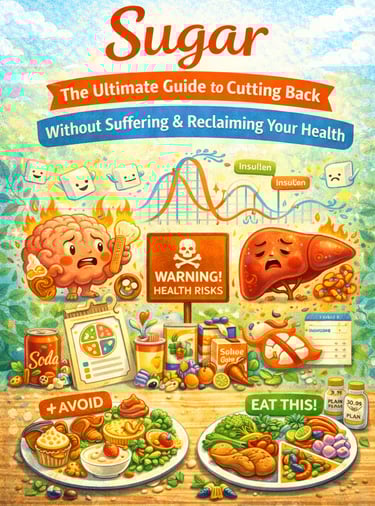

Sugar: The Ultimate Guide to Cutting Back Without Suffering and Reclaiming Your Health
Learn how to reduce sugar from your diet without pain or deprivation. Understand sugar addiction, hidden sugars, the best alternatives, a science-based 30-day plan, and delicious sugar-free recipes. A complete, evidence-based guide.
The Truth About Your Relationship With Sugar
Have you ever found yourself opening the fridge late at night looking for something sweet? 🍫
Or felt that urgent craving for chocolate in the middle of the afternoon?
Maybe you decided to “quit sugar on Monday” and by Wednesday you were secretly eating dessert?
If so, you’re not alone — and no, this has nothing to do with weak willpower.
Sugar is one of the most addictive substances we consume. Studies show it activates the same reward areas in the brain as drugs like cocaine and heroin. Yes, you read that right.
But here’s the good news: you can break free from sugar without suffering, without extreme diets, and without giving up the pleasure of eating.
In this complete guide, you’ll discover:
✓ How sugar hijacks your brain
✓ The real impact on your health (far beyond weight gain)
✓ Where sugar hides (this will surprise you)
✓ A full comparison of sugars and sweeteners
✓ A realistic 30-day reduction plan
✓ Delicious sugar-free recipes
✓ How to reset your taste buds naturally
Get ready to transform your relationship with sweetness — for good.
What Really Happens When You Eat Sugar
The Blood Sugar Roller Coaster
Step 1: Consumption
You eat something sweet.
Sugar is quickly absorbed in the gut.
Glucose enters the bloodstream.
Step 2: Blood Sugar Spike
Blood glucose rises rapidly.
You feel a burst of energy and pleasure.
Dopamine (the “reward” neurotransmitter) is released.
Step 3: Insulin Response
The pancreas releases insulin.
Glucose is stored in muscles, liver… and fat.
Step 4: The Crash
Blood sugar drops quickly.
Fatigue, irritability, poor focus appear.
Strong hunger — especially for more sugar.
Step 5: The Vicious Cycle
You eat more sugar to “boost” energy.
And the cycle repeats.
Why Is Sugar So Hard to Quit?
1. Brain Addiction
Sugar overstimulates dopamine
The more you eat, the more you need
Tolerance increases over time
2. Energy Instability
Constant spikes and crashes
The body learns that sugar = fast energy
Hormonal hunger (not real hunger)
3. Conditioned Habits
Dessert after lunch
Chocolate at the movies
Coffee with cake
Emotional triggers: stress, sadness, boredom
4. The Food Industry
Sugar in almost everything
Powerful marketing
Cheap and accessible
The Real Health Risks of Excess Sugar
1. Weight Gain and Obesity
Excess glucose is stored as fat — especially visceral (abdominal) fat.
Sugar disrupts leptin (satiety hormone), making you eat more and store more.
Shocking data:
Sugar intake has increased 500% in the last 50 years.
Obesity has tripled in the same period.
2. Type 2 Diabetes
Chronic sugar intake leads to insulin resistance.
The pancreas overworks until insulin production fails.
Millions are diabetic — many don’t even know they’re prediabetic.
3. Heart Disease
Sugar:
Raises triglycerides
Lowers HDL (“good” cholesterol)
Increases inflammation
Raises blood pressure
People who get 25% or more of calories from sugar have 3x higher risk of heart-related death.
4. Chronic Inflammation
Sugar activates inflammatory pathways, worsens autoimmune conditions, causes joint pain, and accelerates aging.
5. Glycation & Aging
Sugar binds to proteins like collagen and elastin, forming AGEs (advanced glycation end products).
Results:
Wrinkles and skin sagging
Arterial stiffness
Cataracts
Neurodegenerative diseases
6. Brain Health & Cognition
High sugar intake:
Reduces BDNF (brain growth factor)
Impairs memory and learning
Increases dementia risk
Causes brain fog and mood swings
Studies associate high sugar intake with 54% higher Alzheimer’s risk.
7. Fatty Liver Disease (Non-Alcoholic)
Fructose is processed almost exclusively in the liver.
Excess turns into fat → inflammation → cirrhosis.
8. Oral Health Problems
Sugar feeds harmful bacteria, leading to cavities, gum disease, and tooth loss.
9. Food Addiction & Compulsive Eating
Loss of control
Obsessive thoughts about sweets
Withdrawal symptoms: anxiety, irritability
10. Cancer
Sugar fuels cancer cells (Warburg effect).
High insulin and chronic inflammation increase cancer risk.
How Much Sugar Is “Acceptable”?
WHO Recommendations
Adults: Max 25g/day (6 teaspoons)
Children: 15–20g/day
This includes added sugars and free sugars (honey, syrups, juices).
It does not include sugar from whole fruits or vegetables.
Reality check:
Average intake is 3x higher than recommended.
Hidden Sugars: Where You Least Expect Them
Bread
Sauces (ketchup, BBQ, salad dressings)
Yogurts
Granola and cereal bars
“Natural” boxed juices
Processed meats
Breakfast cereals
📌 Label tip: If sugar (or any of its aliases) appears in the first 3 ingredients — it’s a high-sugar product.
Sugar Types & Sweeteners: Fully Reviewed
Best Options
🏆 Stevia (pure)
🏆 Erythritol
🏆 Monk Fruit
Good in Moderation
Xylitol
Coconut sugar
Raw honey
Use With Caution
Sucralose
Brown sugar
Molasses
Avoid
❌ Aspartame
❌ Agave syrup
❌ Refined sugar
❌ High-fructose corn syrup
30-Day Sugar Reduction Plan (No Suffering)
Week 1 – Awareness
Track everything. Read labels. No changes yet.
Week 2 – Remove the Obvious
Cut soda, packaged juices, desserts, added sugar in drinks.
Week 3 – Hidden Sugars
Remove industrial sauces, sweetened yogurt, cereal bars.
Week 4 – Consolidation
Experiment with sugar-free recipes.
Apply the 90/10 rule for flexibility.
How to Beat Cravings & Withdrawal
Wait 20 minutes
Drink water
Eat protein + healthy fats
Choose naturally sweet fruits
Move your body
Brush your teeth
Withdrawal symptoms are temporary — and worth it.
Resetting Your Taste Buds
After 2–4 weeks, fruit tastes sweeter.
After 2 months, sugar feels overpowering.
After 3 months, your palate is fully reset.
Final Thoughts: Freedom From Sugar Is Possible
Reducing sugar is not about perfection or deprivation.
It’s about awareness, smarter choices, and sustainable habits.
You deserve:
✅ Stable energy
✅ Mental clarity
✅ Healthy skin
✅ Balanced weight
✅ Freedom from cravings
Start today. Start small. But start.
👉 Your challenge: Choose 3 actions from Week 1 and apply them over the next 7 days. Then share what you discovered about your sugar intake.
Your body — and your future — will thank you. 🍎