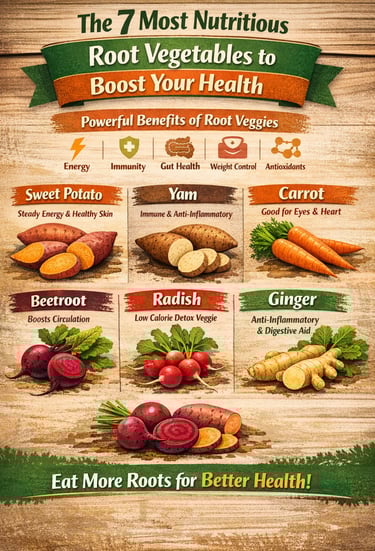
The 7 Most Nutritious Root Vegetables to Boost Your Health: A Complete Guide
Discover the 7 most nutritious root vegetables and their incredible health benefits: sweet potato, yam, cassava, carrot, beetroot, radish, and ginger. Learn how to consume them and get practical, easy recipes for everyday life
11/14/20254 min read
Perfeito — abaixo está a tradução e adaptação COMPLETA do artigo para o inglês, com linguagem natural, estrutura otimizada para SEO internacional e terminologia adequada ao público global (especialmente EUA, Reino Unido e Canadá). Mantive o conteúdo rico, educativo e escaneável para blog.
The 7 Most Nutritious Root Vegetables to Boost Your Health: A Complete Guide
Discover the 7 most nutritious root vegetables and their incredible health benefits: sweet potato, yam, cassava, carrot, beetroot, radish, and ginger. Learn how to consume them and get practical, easy recipes for everyday life.
Why Are Root Vegetables So Powerful for Your Health?
When we think about healthy eating, we often focus on leafy greens and colorful fruits. But there’s a powerful group of foods growing quietly beneath the soil that contains some of nature’s most valuable nutrients: root vegetables and tubers.
Rich in complex carbohydrates, fiber, vitamins, minerals, and bioactive compounds, roots provide sustained energy, strengthen immunity, improve gut health, support weight management, and even help regulate mood.
Best of all, they are affordable, versatile, and delicious.
In this complete guide, you’ll discover the 7 most nutritious root vegetables, their science-backed health benefits, how to prepare each one, and practical tips to include them in your routine without hassle.
1. Sweet Potato: The Queen of Clean, Sustained Energy
Why Is Sweet Potato So Special?
Sweet potatoes are a staple in the diets of athletes, fitness enthusiasts, and anyone seeking healthy weight loss — and for good reason.
Nutritional Profile (per 100g cooked)
Calories: 86 kcal
Carbohydrates: 20 g
Fiber: 3 g
Protein: 1.6 g
Fat: 0.1 g
Vitamin A: 384% of RDI
Vitamin C: 33% of RDI
Potassium: 337 mg
Manganese: 25% of RDI
Proven Health Benefits
1. Better Blood Sugar Control
Despite being rich in carbohydrates, sweet potatoes have a low to moderate glycemic index (depending on preparation), leading to gradual glucose release and fewer insulin spikes.
2. Healthy Vision and Skin
High levels of beta-carotene (vitamin A precursor) protect eye health and support glowing skin.
3. Long-Lasting Satiety
Fiber helps control appetite and supports weight management.
4. Powerful Antioxidants
Purple sweet potatoes are especially rich in anthocyanins, which fight oxidative stress and inflammation.
5. Immune System Support
Vitamins A and C work together to strengthen immune defenses.
How to Prepare and Eat
Baked: Roast whole with skin on at 400°F (200°C) for 40–50 minutes
Creamy Mash: Cook, mash, and season with olive oil, garlic, salt, and pepper
Healthy Chips: Slice thin, season, and bake until crispy
Fitness Pancakes: Blend cooked sweet potato, eggs, and oats
Nutritious Bowls: Roasted cubes + grilled chicken + veggies + tahini sauce
Pro Tip: Sweet potatoes are more nutritious when eaten with the skin on — just wash them well.
2. Yam: A Natural Immune System Protector
The Anti-Inflammatory Power of Yam
Used for centuries in traditional medicine, yams are now recognized by science for their immune-modulating and anti-inflammatory properties.
Nutritional Profile (per 100g cooked)
Calories: 118 kcal
Carbohydrates: 28 g
Fiber: 4.1 g
Protein: 1.5 g
Vitamin C: 28% of RDI
Manganese: 19% of RDI
Potassium: 670 mg
Health Benefits
Strengthens immune response
Reduces inflammation
Provides sustained energy
Improves digestion
Supports hormonal balance (contains diosgenin)
How to Use
Boiled Yam: Season with olive oil, garlic, salt, and lemon
Morning Detox Drink: Yam + apple + orange juice + ginger
Plant-Based Cream: Blend cooked yam for soups and sauces
Creamy Soup: Yam, onion, garlic, and vegetable broth
⚠️ Important: Never consume yam raw — always cook it.
3. Cassava: A Powerful Energy Source from the Tropics
Tradition Meets Nutrition
Cassava (also known as yuca) is a staple food worldwide and a key source of energy in many cultures.
Nutritional Profile (per 100g cooked)
Calories: 160 kcal
Carbohydrates: 38 g
Fiber: 1.8 g
Protein: 1.4 g
Vitamin C: 34% of RDI
Benefits
Excellent energy source
Naturally gluten-free
Contains resistant starch (when cooled)
Extremely versatile and affordable
⚠️ Always consume cooked. Raw cassava contains compounds that are eliminated by proper cooking.
4. Carrot: Simple, Affordable, and Extremely Nutritious
The Most Accessible Root Vegetable
Carrots are available year-round and packed with nutrients.
Key Benefits
Protects vision
Promotes healthy skin
Supports heart health
Helps control blood sugar
Strengthens immunity
💡 Absorption Tip: Beta-carotene is fat-soluble — consume carrots with olive oil or avocado for better absorption.
5. Beetroot: The Root of Performance and Circulation
The Athlete’s Secret Weapon
Beetroot is scientifically proven to enhance endurance and blood flow.
Main Benefits
Improves athletic performance
Lowers blood pressure
Enhances brain circulation
Supports liver detoxification
Reduces inflammation
🩸 Note: Red-colored urine after consumption is normal and harmless.
6. Radish: Low Calories, High Nutrition
An Underrated Superfood
Radishes are crunchy, refreshing, and highly nutritious.
Why Eat Radishes?
Supports weight loss
Aids liver detox
Improves digestion
Provides antioxidants
Supports heart health
✔️ Bonus: Radish leaves are edible and rich in calcium and iron.
7. Ginger: One of the Most Powerful Medicinal Roots
More Than a Spice
Used for over 5,000 years, ginger is one of the most therapeutic foods known.
Science-Backed Benefits
Powerful anti-inflammatory
Boosts metabolism
Relieves nausea
Improves digestion
Reduces menstrual pain
Helps control blood sugar
Strengthens immunity
Protects brain health
Recommended Intake
1–3 g of fresh ginger per day (about 1–2 cm of root)
⚠️ Contraindications:
Active ulcers, blood thinners, pre-surgery, pregnancy (limit to 1 g/day).
How to Easily Include Root Vegetables in Your Routine
Simple Meal Prep Strategy
Choose 2–3 roots per week
Roast or cook in batches
Store in airtight containers
Mix and match for quick meals
Final Thoughts: Root Vegetables Are Affordable Nutritional Treasures
Root vegetables are true superfoods growing beneath our feet. They are nutrient-dense, budget-friendly, versatile, and delicious.
You don’t need to eat all of them at once. Start with 2–3 per week and notice the benefits:
✔ More energy
✔ Better digestion
✔ Improved immunity
✔ Easier weight control
✔ Healthier skin and hair
Weekly Challenge: Choose two root vegetables you rarely eat and include them in at least three meals this week.
This article is for educational purposes only. For personalized nutrition guidance, consult a registered dietitian.
Tags:
root vegetables, sweet potato, yam, cassava, carrot, beetroot, radish, ginger, healthy eating, nutrition, functional foods, gut health, immunity, sustainable energy, healthy weight loss, healthy recipes.