

The Hidden Side of Ultra-Processed Foods
How Your Diet May Be Affecting Your Mental Health
1/6/20265 min read
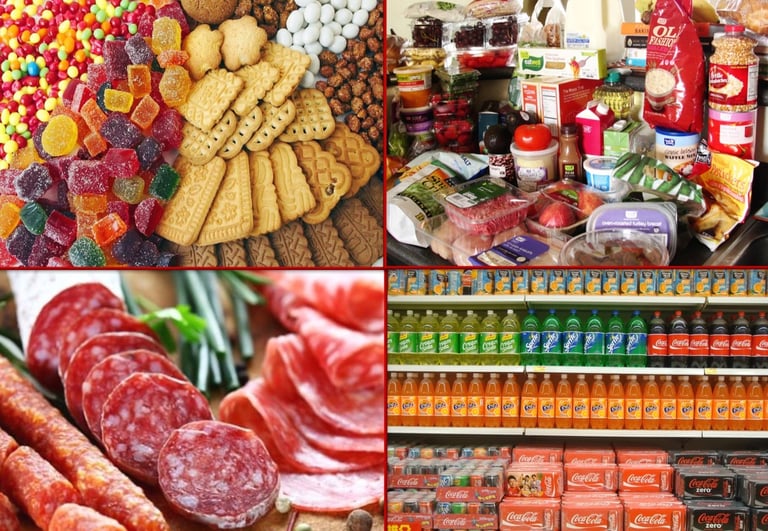
The Hidden Side of Ultra-Processed Foods: How Your Diet May Be Affecting Your Mental Health
Did you know that your lunch soda, quick dinner instant noodles, or snack cookies could be impacting much more than just your weight? Recent research has revealed a concerning connection between ultra-processed food consumption and mental health problems, especially depression and anxiety.
What Are Ultra-Processed Foods?
Before diving into the mental health impacts, it's important to understand what characterizes ultra-processed foods. According to the NOVA classification, developed by Brazilian researchers, these products undergo multiple industrial stages and contain ingredients you wouldn't use at home: preservatives, artificial colors, emulsifiers, flavor enhancers, and other chemical additives.
Some common examples include:
Sodas and artificial juices, packaged snacks and filled cookies, industrialized burgers and nuggets, instant noodles, ready-made frozen meals, and processed meats like hot dogs and sausages.
These products are formulated to be hyperpalatable—extremely tasty and addictive—easy to consume, and have long shelf life. It's no wonder they represent an increasingly larger slice of our daily diet.
The Silent Epidemic
In Brazil, the COVID-19 pandemic brought to light a growing discussion about mental health, with a 25% increase in anxiety and depression cases worldwide, according to the World Health Organization. The country leads Latin America in depression cases, and a less-discussed aspect of this crisis is precisely the relationship between diet and psychological health.
The numbers are alarming: American adults consume about 57% of calories from ultra-processed foods; children and adolescents, 67%. In Brazil, although data varies, consumption of these products has been growing rapidly in recent decades.
What Research Reveals
Increased Risk of Depression
A meta-analysis revealed that for every 10% increase in ultra-processed food intake, there is an 11% association with depression risk in adults. But the numbers become even more impressive when we look at specific studies:
A study from the University of São Paulo School of Medicine revealed that high consumption of ultra-processed foods can increase the risk of developing persistent depression by up to 58%, characterized by recurrent episodes over time.
Researchers from the Federal University of Viçosa observed that adults who consumed between 32% to 72% of daily calories from ultra-processed foods had an 82% risk of developing depression during the study's follow-up period.
Impacts on Anxiety
Diets rich in ultra-processed foods were associated with a 44% higher risk of depression and 48% higher risk of anxiety, according to a review published in the journal Nutrients.
Why Does This Happen? The Mechanisms Behind the Connection
The relationship between ultra-processed foods and mental health is not a simple coincidence. Scientists have identified several biological mechanisms that explain this association:
1. Chronic Inflammation
Ultra-processed foods are rich in refined sugars, low-quality fats, and sodium. These components can trigger inflammatory processes in the body. Dysfunctional fat cells release inflammatory molecules that function as triggers for depression, anxiety, and even dementia.
2. The Gut-Brain Axis
One of the most fascinating findings of recent science is the role of the gut microbiome in mental health. The intestinal microbiota participates in the synthesis of important neurotransmitters such as serotonin, noradrenaline, and dopamine, recognized as well-being and happiness hormones.
The consumption of ultra-processed foods can affect gut microbiota through the presence of cosmetic additives, such as colorants, flavorings, and emulsifiers. These substances can alter the composition of intestinal bacteria, increasing inflammation in the body and causing changes in brain structures and functions.
People with depression show alterations in the phyla of bacteria that colonize the intestinal microbiota, with lower microbial diversity and a predominant profile of microorganisms that are not beneficial.
3. Nutritional Deficiency
By consuming ultra-processed foods, people neglect fruits, vegetables, and whole grains prepared simply, being deprived of nutrients that are good for the brain, including phytonutrients. There are about 8,000 varieties of polyphenols with antioxidant and anti-inflammatory properties, and diets low in these compounds are linked to depression.
4. Dependence and Addiction
Ultra-processed foods have more in common with a cigarette than with Mother Nature's foods, states Ashley Gearhardt, psychology professor at the University of Michigan. Companies intentionally formulate these products to create dependence, reducing our control over eating.
The Brazilian Study That's Changing Perspectives
A study conducted by André Werneck, researcher at Nupens (Center for Epidemiological Research in Nutrition and Health) at USP, analyzed data from nearly 16,000 Brazilian adults without depression diagnosis at the study's start. The follow-up revealed a clear connection between ultra-processed food consumption and the emergence of depressive symptoms.
Werneck performed statistical analyses to investigate whether the association between depressive symptoms persisted even among those who consumed both fruits and vegetables and large amounts of ultra-processed foods. The result? The association was reduced but still remained significant, suggesting that the effects of ultra-processed foods go beyond simple nutritional profile.
The researcher, who didn't anticipate that his discoveries would alter his own relationship with food, now declares: "Today, I try to avoid ultra-processed foods as much as possible."
It's Not Just Adults
Adolescents present recurrent complaints of fatigue, low immunity, headaches, intestinal changes, mood swings, anxiety, and difficulty concentrating. These warning signs, according to experts, may be related to excessive consumption of ultra-processed foods during a crucial development phase.
Diet directly affects the endocrine system and nervous system. The body feels it, and the mind does too. Regular consumption of ultra-processed foods in childhood and adolescence can compromise not only physical growth but also cognitive and emotional development.
What To Do? Pathways to Healthier Eating
Given this scientific evidence, the good news is that dietary changes can make a difference:
Prioritize Whole and Minimally Processed Foods
Healthier dietary patterns, based on whole and minimally processed foods such as fruits, vegetables, seeds, nuts, grains, and whole cereals are associated with lower incidence of depressive symptoms.
Follow the Brazilian Food Guide
The Brazilian Food Guide, an international reference in nutritional guidance, offers a simple golden rule: "Peel more, unwrap less." The document emphasizes the importance of:
Making whole or minimally processed foods the basis of your diet, using oils, fats, salt, and sugar in small amounts when seasoning and cooking, limiting the use of processed foods, and avoiding the consumption of ultra-processed foods.
Start Small
Dietary changes don't need to be radical. Small substitutions can make a big difference:
Replace sodas with fruit-infused water or natural teas, substitute filled cookies with fresh fruits or nuts, prepare homemade meals, even if simple, and read labels and choose products with fewer ingredients and additives.
Be Careful with Drastic Changes
It's important that diet changes are made gradually and, when possible, with professional guidance. Abrupt changes in eating habits and the use of certain medications can significantly affect gut flora.
The Importance of an Integrated Approach
It's worth noting that healthy eating, although fundamental, doesn't replace proper treatment for mental disorders. Depression and anxiety cases should be monitored by mental health professionals, including psychiatrists and psychologists.
However, with the country facing an epidemic of disorders like depression, especially after the pandemic's impacts, changing eating habits can be an accessible and effective solution in preventing and treating depressive and anxiety symptoms.
Conclusion: Investment in Health
The consumption of ultra-processed foods is associated with an increased risk of at least 32 harms to human health, including cancer, serious heart and lung diseases, mental health issues, and premature death, according to a review published in the scientific journal The BMJ.
The message is clear: diet is an investment in health. When we talk about mental health, we're talking about quality of life, relationships, productivity, and well-being. Every food choice we make can be a step toward a more balanced mind and healthier body.
Remember: you have the power to choose what you put on your plate. And these choices, as science has increasingly shown, have the power to transform not only your body but also your mind.
This article is based on recent scientific studies and has an informative nature. For specific health issues, always consult qualified professionals.